11 Dec Why your body can’t switch off (and how to change it)
The number 1 thing I work with clients on is this feeling of chronic activation.
- “Hard to switch off.”
- “Always tense.”
- “My body feels ‘on’ even when I’m supposed to be relaxing.”
It shows up in your body:
Tight jaw, clenched belly, shallow breathing, that “always on” hum under the surface.
It shows up in your attention:
Quick to react, hard to slow down, bouncing between tasks without ever feeling done.
It shows up in your sleep:
Tired but unable to drop in, waking up through the night, or starting the day already depleted.
One of the key ideas I explain to them is this:
Relaxation is not an on-off switch. Your nervous system doesn’t relax just because you sit down on the couch, step away from your screen, or turn off the lights.
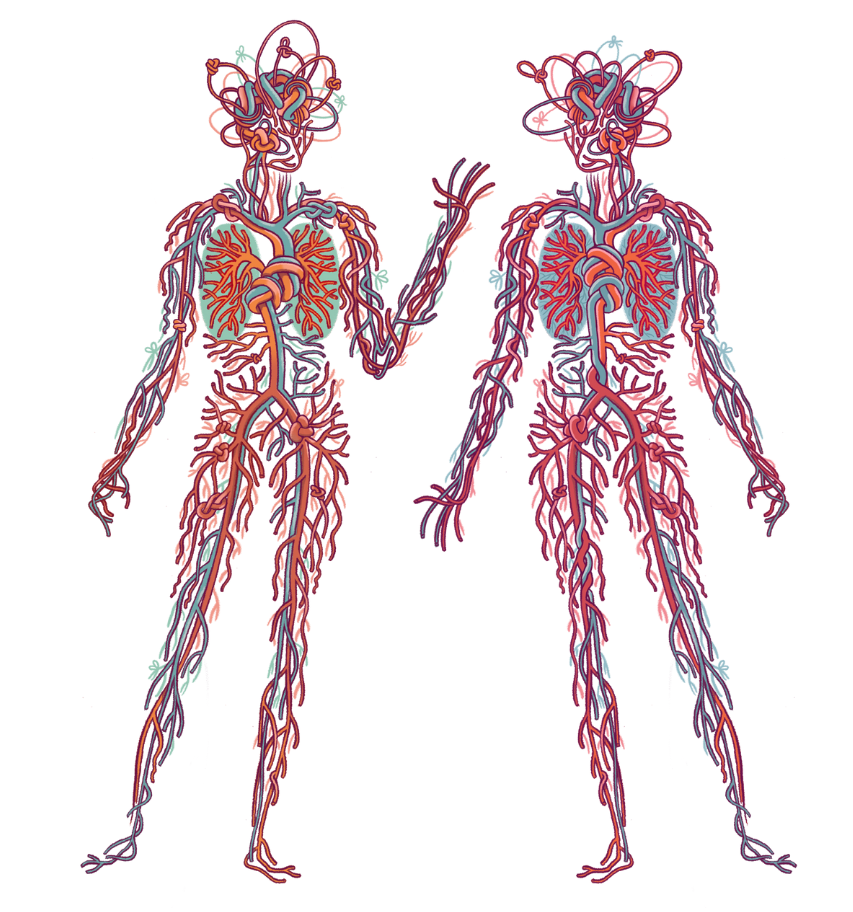
After months or years of running in overdrive, your nervous system has literally forgotten how to downshift. Your baseline of autonomic arousal has crept up. What now feels “normal” to you is actually a state of chronic sympathetic activation.
Think about it: when was the last time you felt truly, deeply relaxed?
Not exhausted, not crashed on the couch scrolling your phone, but genuinely at ease in your body? Every muscle loose, every limb heavy, deep and slow breaths?
After years of activation, you need to train your nervous system to relax again. Relaxation is a skill. And like any skill, it requires practice.
Here are three simple practices to lower your baseline arousal and rebuild your capacity for relaxation:
1️⃣ Slow breathing
This is the quickest way to teach your body how to downshift. You’re aiming for 5–6 breaths per minute instead of your usual 15–20. This pace nudges your vagus nerve and lowers physiological arousal.
Start with just 5 minutes of 3-6 breathing (inhale 3, exhale 6). At first, it might feel strange or “too slow.” That’s normal. Your system isn’t used to this pace yet. That’s why it works.
From there, work up to 10-15 minutes, 5-7x per week.
You can use a free app like Breathe to keep the timing simple.
2️⃣ Progressive muscle relaxation (PMR)
Most people don’t notice they’re tense until they’re asked to release something.
In PMR, we systematically tense and release each muscle group, teaching your body the difference between tension and actual relaxation. It’s like showing your muscles: “This is tight. Now THIS is released.”
Here’s a 20 mins session I use with clients.
Do this after work or before bed. The first round might be difficult to focus, but stay with it. The goal isn’t perfection; it’s contrast. Your body learns by comparing “tight” and “loose.” After a few sessions, people start catching tension in real time, and releasing it in seconds.
3️⃣ Non-Sleep Deep Rest (NSDR)
These are guided body scans that create a state of profound calm without sleeping. This isn’t meditation where you’re trying to clear your mind. It’s actively slowing down your breathing and directing your attention through your body, consciously releasing as you go.
You may drift, zone out, or lose track of the guidance. All normal. The nervous system is doing the work.
Use NSDR in the afternoon as a reset or in the evening as a wind-down. Many clients feel more rested from NSDR than from a nap.
Here are two of my favorites by Huberman Lab: 10 minutes • 20 minutes
It takes some effort and determination to build these practices into your day. But my clients quickly discover that these aren’t time-wasters. They’re capacity builders.
When you can actually downshift your nervous system on command, everything changes. Better decisions. Clearer thinking. Deeper focus. Actual rest when you sleep instead of that wired-but-tired feeling.
I’d recommend to start simple. Pick one of the practices and do it 3–5 times per week. Your nervous system learns through repetition, not intensity. The more you practice, the faster you’ll feel the difference.
Inside my breath and body-based programs, we figure out the right mix for your life. Some clients need to start with just 30 sec breathing resets between meetings. Others can commit to a full NSDR practice before bed. We figure out what fits your life, what you’ll actually do, and what moves the needle for your specific nervous system.
And yes, I hold you accountable to doing it, because knowing about these tools and using them are two very different things. 😉