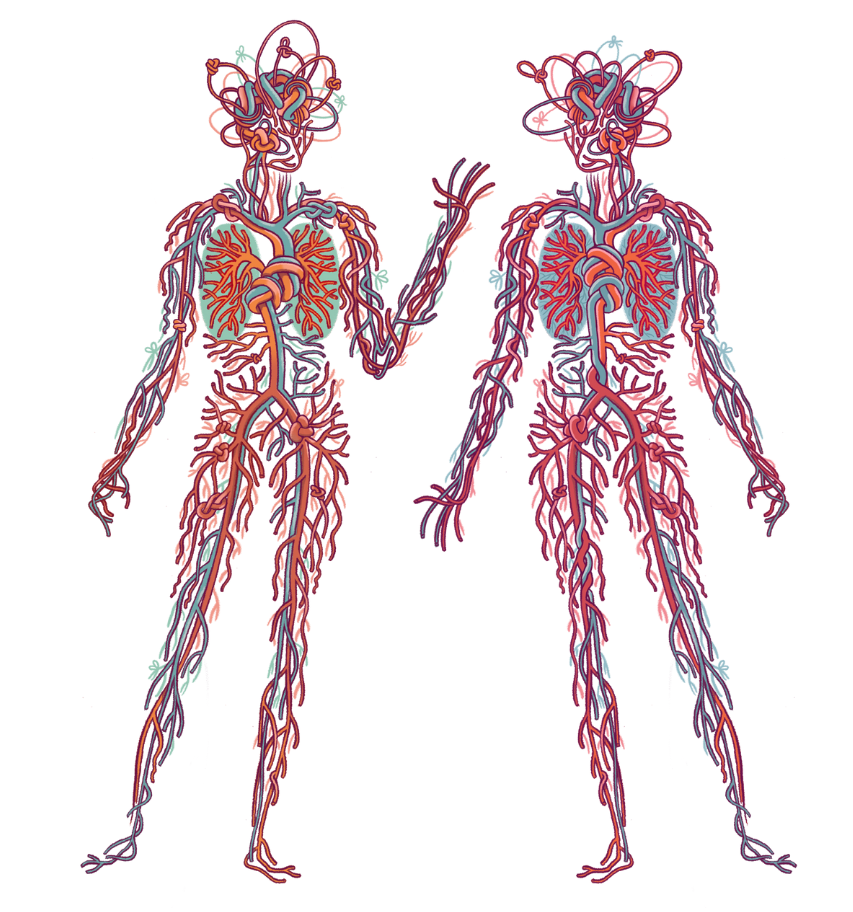
12 Jun Respiratory Sinus Arrhythmia and Heart Rate Variability: Why Your Heart Rate Should Never Be Perfectly Steady
Place two fingers on your neck right now. Feel your pulse.
Now take a slow inhale — and notice if it speeds up, just slightly. Then exhale — and notice if it slows back down.
That’s not random. That’s your nervous system working exactly as it should.
Your heart rate is supposed to fluctuate
Most people assume a healthy heart beats like a metronome. Steady. Consistent. Unchanging.
The opposite is true.
A heart that responds (speeding up on the inhale and slowing down on the exhale) is a healthy, flexible heart. A heart that beats at exactly the same pace regardless of what you’re doing is actually a sign of a nervous system that’s lost its adaptability.
The phenomenon behind this is called respiratory sinus arrhythmia (RSA). The name sounds like a problem, it’s not. It’s an incredibly important feature.
On every inhale, your heart rate rises slightly. On every exhale, it falls. Over and over, with every single breath, all day long (whether you notice it or not.)
Heart Rate Variability: a key marker of nervous system health
Heart rate variability (HRV) is the measurement of this fluctuation, specifically, the variation in time between consecutive heartbeats.
RSA is one of the key mechanisms driving HRV. The more your heart rate responds to your breath, the higher your HRV tends to be.
And high HRV is one of the most well-researched markers we have for nervous system health. It’s associated with better stress recovery, sharper focus, emotional regulation, and cardiovascular resilience.
Low HRV — a heart that barely responds — tends to correlate with chronic stress, poor sleep, burnout, and reduced capacity to handle pressure.
Why this matters beyond the data
Here’s what makes RSA and HRV more than just metrics:
Your breath directly drives your heart rate.
Emphasise the inhale, speed up the breath → heart rate rises. Slow down, extend the exhale → heart rate drops.
This means your breath is, at all times, a direct lever on your nervous system. A powerful one. One that’s always available, always with you.
The goal isn’t to keep your heart rate permanently low. It’s to have a responsive heart — one that can rise quickly when the situation demands it, and come back down just as fast when it’s over.
That range, that flexibility, is what we’re training with breathwork.
Feel it for yourself
The best way to understand this isn’t to read about it. It’s to feel it: finger on your pulse, paying attention to what shifts as you slow down and speed up your breath.
I made a guided practice for exactly that. It’ll take you through the full range: from a faster, inhale-led pace to a slow, exhale-extended breath, so you can feel your own heart rate shifting in real time.