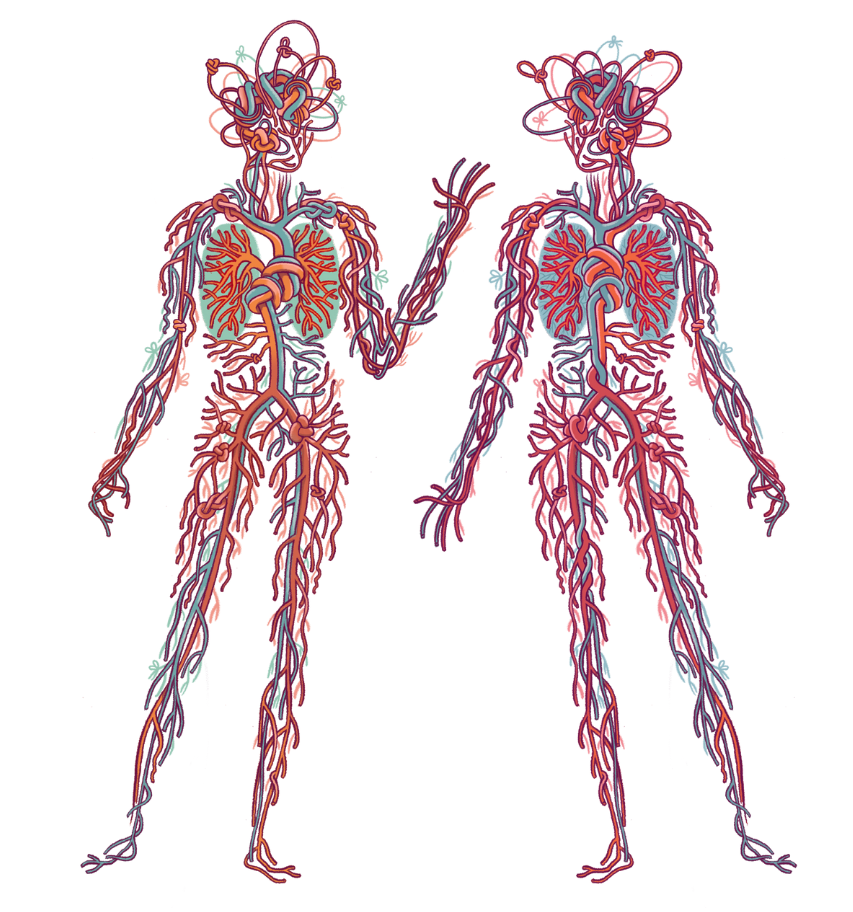
My brain doesn’t do so well with chaos and uncertainty, and so it doesn’t help that I have an itch to move to a new country every few years. A couple of years in New York, a longer stint in Singapore and then, feeling the pull to be closer to home (Belgium), over to London. Just as we were settled in (Apartment - check! Billing address changed for all my online subscriptions - check!), my partner and I realize it’s not the right place for us. This felt incredibly disorientating. We just went through an entire moving process. So then where is the “right” place for us? Is there even such a thing? After a few months of inner turmoil and long walks talking about what matters to us, we decided to move to Lisbon. We have no social network here, no family. We don’t speak the language and can’t say we know much about the country. But something about the place just felt right, and we decided to trust that gut feeling this time. The months it took us to make the decision and pack up and move again were riddled with uncertainty and overwhelm. There’s so much admin to figure...

There’s a direct relationship between how much and how quickly we breathe, and the state of our nervous system and thus our physiological and mental health. We assume our body reflexively knows how much air it needs at all times, but seems like that is not the case. Our bodies have adapted to our modern lifestyles, which often involve chronic stress, sedentary habits, unhealthy diets, overheated homes, and lack of fitness. All of that has led to a culture of dysfunctional over-breathing, for some people up to 2 and 3 times the required amount. We breathe too much, too fast and often through the wrong hole. (An incredible book to read is Breath by James Nestor, a journalist who travelled the world to explore what went wrong with our breathing and how to fix it.) Studies that have explored breathing patterns have shown that most people breathe anywhere between 15-30 breaths per minute. These numbers probably don’t mean much until you know that the healthiest and most efficient way of breathing is only 5.5 breath cycles per minute. You can easily measure your own respiration rate if you’d like. Just set a timer for one minute and count the number of breath cycles. One breath cycle...

I feel my back pressed against the chair and the warmth of my feet on the hardwood floor. I focus on the slow rise and fall of my belly, controlling the movement of my diaphragm. Up...

Our bodies send us clear signals when we need a break. Fidgetiness, hunger, drowsiness, loss of focus. Mostly, we override them. We find artificial ways to pump up our energy: caffeine, sugary foods, and our body’s own stress hormones — adrenalin, norepinephrine, and cortisol. A much smarter way would be to work with something we all have at our disposal: Our ultradian rhythms. These rhythms exist in all of us, and we can leverage them as a way to engage in focused bouts of deep work. This is not just another productivity fad. It is a biological fact that we are optimized for focus and attention within these 90–120 minutes cycles. In his first Premium AMA, Stanford professor Andrew Huberman spoke at length about how he uses ultradian cycles to manage his day and best capture neuroplasticity (even on the weekends!). In this post, I describe everything I’ve learned about ultradian cycles, how they work and how I personally plan on applying this to my life (definitely not on the weekends!). The Science Behind Ultradian Rhythms Most of our body’s essential processes run on a 24-hour cycle called a ‘circadian rhythm’. Circadian = “about a day” On a coarse level, the circadian rhythm manages the transition between wakefulness and sleep. In addition, it...

Is there anything you wish you had learned more about in school? For me, without a doubt: Neuroplasticity. The incredible feature that allows our nervous system to change in response to experience. I’m convinced I would have approached studying and learning very differently (and appreciated my young, plastic brain a lot more!).     We’re Designed To Change Neuroplasticity is one of the most amazing yet underrated aspects of our biology. It's the biological equivalent of having a Growth Mindset: with hard work and good strategies, you can change the physical circuitry of your brain. Because here's the thing: All of us are born with a nervous system that isn’t just capable of change but is designed to change. This allows us to think differently, learn new things, forget painful experiences, and adapt to practically anything life throws at us. For a long time, it was assumed that only the young brain is plastic and can change. (Something about an old dog and new tricks?) But scientific research is now very clear: the adult brain is plastic. And that is the essence of the incredible breakthrough of neuroplasticity: your brain is not fixed. Instead, your brain can change in response to your experiences, thoughts, and actions. You can rewire your brain so new motor, cognitive and...

All of us are born with a nervous system that isn’t just capable of change but is designed to change. That is the essence of the incredible breakthrough of neuroplasticity: Your brain is not fixed. Instead, it changes in response to your experiences, thoughts, and actions. This allows you to think differently. Learn new skills. Forget painful experiences. And adapt to practically anything life throws at you. For a long time, it was assumed that only the young brain is plastic. (Something about an old dog and new tricks?) But scientific research is now undeniable: No matter how old you are, you can rewire your brain so new motor, cognitive and emotional skills are burned into the neural circuitry. The most widely accepted conclusion of current research in neuroscience is that of neuroplasticity: Our brains grow, change and adapt at all times in our lives. “Virtually everyone who studies the brain is astounded at how plastic it is.” (Kurt Fischer, Harvard Medical School)   The most underrated feature of your nervous system First, a quick note on how this works on a neurological level. Research has shown that consistently repeating an action leads to clear physical changes in the brain. Within our brains are billions upon billions of neurons, interconnected to form a complex set of...

If you've been beating yourself up lately because you can't focus “like you used to”… read this: Deep focus isn’t something you force. It’s something you protect. Now, what do I mean by that? It means prioritising sleep, building recovery into the day, and learning how to down-regulate your system instead of running it in high gear all the time. Especially as we get older… As we age, the brain doesn’t lose its ability to focus, but it does become less energetically efficient at doing so. Cognitive control tends to peak earlier in adulthood (between 27 and 36 years) and then decline. Over time, the brain becomes more conservative with how it spends its resources. So if you’re like me and you’re past that peak, don’t panic! This doesn’t mean a loss of intelligence, creativity, or depth. In fact, many higher-order skills improve with age. (I do genuinely feel wiser with a richer internal life than I did in my 20s 😉) It simply means that brute-force strategies that used to work (long hours, constant pressure, pushing through fatigue) now come with a much higher energy cost. [caption id="" align="alignnone" width="407"] Image source: [Authors], “Li, Z., Petersen, I. T., Wang, L., Radua, J., Yang, G., & Liu, X. (2025). The...

I spent three days in total darkness on the island of Koh Phangan, Thailand. In this piece, I share what that experience was like—the moments of ease and discomfort, what came up when there was nothing to distract me, and what I’m taking forward from it. Night 1: Entering total darkness K., the retreat lady, quickly showed me around the sealed earth dome, —“Here’s how you turn on the air ventilation system, do that after every breakfast and dinner, when the air outside is cool. Here’s the shower. Here’s how you can communicate with us. Any questions?”—and then, she was gone. I stood in the middle of the dome, with a small torch in my hands. K. had told me to use the light to get my bearings and organize my stuff, and to turn off whenever I felt ready. Those first moments felt incredibly strange. I had just come off a 3-day boat trip with friends, a final wild night in our favorite restaurant in Phuket, and suddenly I was here, alone in this bare cell-like room. My friend, Ben, was in the hut next to me, but everything went so quickly and we did not have a chance to give each other...

Just learned about the *ta-daaaaa* list, from my friend Yasmin Vantuykom. Ever heard of these? It’s basically a list of things you’re proud of having accomplished (instead of only ever fixating on the hundreds of things you need to/could do/should do.) 2025 was my first entire calendar year of self-employment, running my breath- and body-oriented coaching & retreats business. (I still can’t really believe I’m actually doing this!) There’s lots of great stuff about it: The flexibility, the intellectual challenge, doing something I believe is meaningful… BUT… As you might expect, the level of self-motivation and self-belief required, day after day, is pretty relentless. So, if you’ll indulge me: I’m going to pat myself on the back just a little bit for some of the things I’ve done this year. No big end of year review. No major goal-setting. Just a quick run-down of what I’m most excited about from this year, plus the 3 principles I’ll take with me in 2026. 🔹 15 private coaching clients Out of everything, probably most proud of the reflections of these incredible people I got to work with. From Commercial Directors, to a Neurotech startup founder, to an Investment Fund General Partner, to Software Developer, to IT specialist. All highly ambitious, curious, driven people who...

The number 1 thing I work with clients on is this feeling of chronic activation. "Hard to switch off." "Always tense." "My body feels 'on' even when I'm supposed to be relaxing." It shows up in your body: Tight jaw, clenched belly, shallow breathing, that “always on” hum under the surface. It shows up in your attention: Quick to react, hard to slow down, bouncing between tasks without ever feeling done. It shows up in your sleep: Tired but unable to drop in, waking up through the night, or starting the day already depleted. One of the key ideas I explain to them is this: Relaxation is not an on-off switch. Your nervous system doesn't relax just because you sit down on the couch, step away from your screen, or turn off the lights. After months or years of running in overdrive, your nervous system has literally forgotten how to downshift. Your baseline of autonomic arousal has crept up. What now feels "normal" to you is actually a state of chronic sympathetic activation. Think about it: when was the last time you felt truly, deeply relaxed? Not exhausted, not crashed on the couch scrolling your phone, but genuinely at ease in your body? Every muscle loose, every limb heavy, deep...