Session on Nervous System Regulation for Leaders
Hi Strada team & portfolio CEOs,
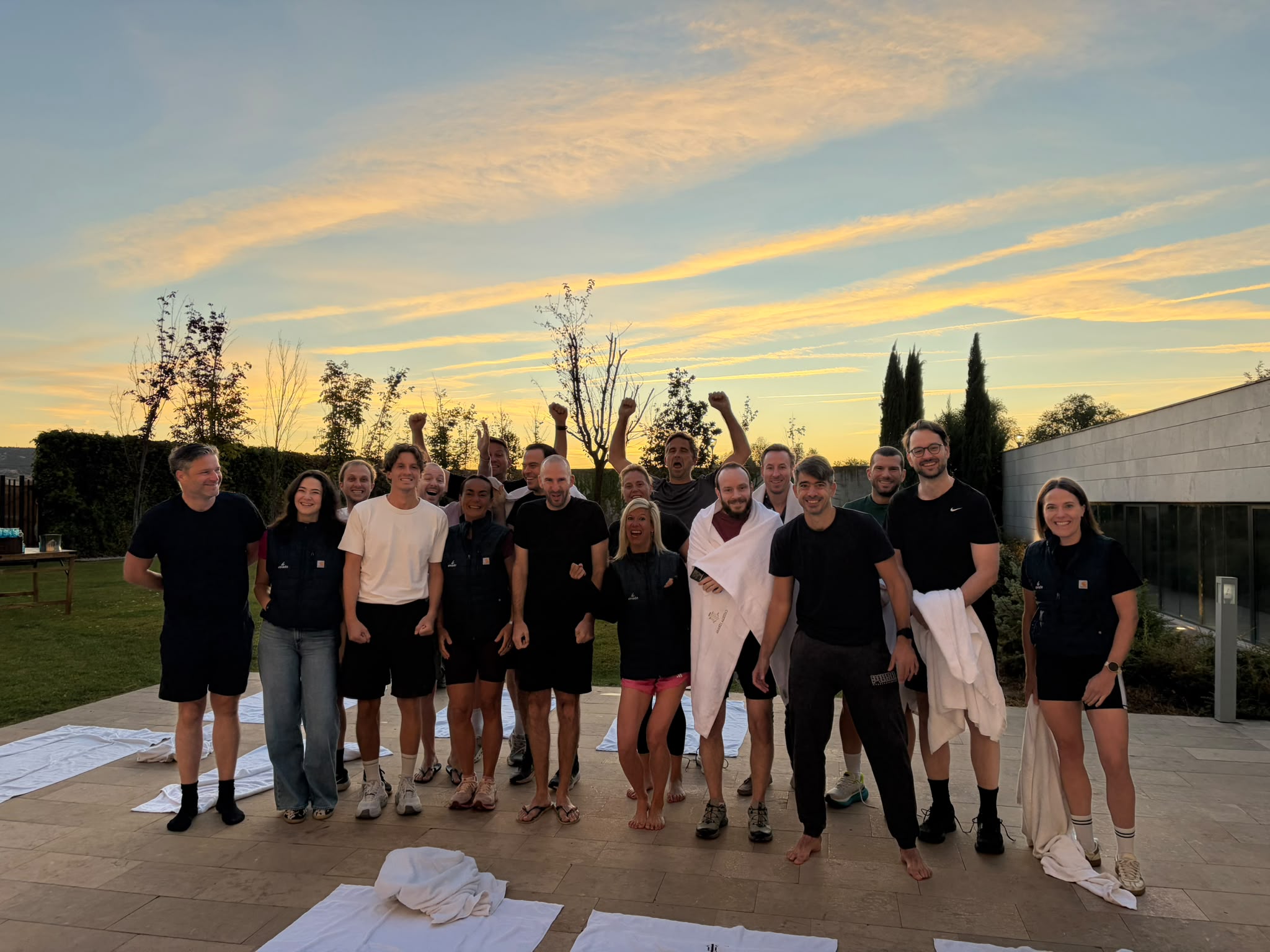
Thank you for showing up so bright and early for a refreshing (quite literally) morning session.
Below is a recap of the practices we went through together. Each technique comes with a short visual pacer, so you can follow the rhythm and try it right here on the page. You'll also find additional context around nervous system regulation and the role of the breath.
I am extremely passionate about helping people introduce these practices into their lives, because of how much it has changed how I feel, think and operate. I appreciate a one-time group session is never enough, so I would love to offer everyone a complementary 1:1 session: we'll run through a short breathing assessment and a few techniques, focused on how breath and nervous system work can support your sleep, stress management, resilience, focus and energy.
My intention is that you leave with a clear next step on what you can do.
Book your complimentary session →Take care everyone, and see you later!
Charlotte
Your five practices at a glance
| Technique | When to use | How | Time |
|---|---|---|---|
| Day-to-day breathing pattern Foundation Jump to technique → |
As your default, when at rest, building the baseline day to day | In and out through the nose, full and unforced, belly and lower ribs expanding | Ongoing |
| Coherent Breathing Daily protector Jump to technique → |
Once daily, ideally evening. Use to wind down and facilitate transition to deep sleep. | 4–6 seconds in, 4–6 seconds out through the nose, smooth and continuous | 5–10 min |
| Physiological Sigh Reduce arousal Jump to technique → |
When you're activated and can't switch off: after a stressful call, before a hard conversation, stuck in traffic | Double inhale through the nose (full + short sip on top), then one long, slow exhale through the mouth | 1–3 breaths |
| Box Breathing Balance arousal Jump to technique → |
When you're scattered and need calm focus: before or during a high-stakes meeting or negotiation | 4-sec inhale, 4-sec hold, 4-sec exhale, 4-sec hold | 2–5 min |
| Cyclic Hyperventilation Increase arousal Jump to technique → |
When you're flat or sluggish and need a genuine lift: mid-afternoon dip, before a demanding task | 10–20 vigorous nasal inhales + passive mouth exhale, then one full exhale and hold for 15 seconds. 2–3 rounds | 2–3 min |
The techniques in detail
Day-to-day breathing pattern: slow and expansive
As your default, when at rest
- In and out through the nose, except when exercising.
- Keep it gentle and slow. No pulling or forcing air.
- Let the belly and lower ribs expand, like a gentle wave (diaphragmatic breathing).
Why it works: this expansive, nasal breath promotes gas exchange in your lungs and ensures sufficient CO2 in your blood, which improves oxygenation of your cells and tissues, including your brain, supporting a more relaxed, energetic, focused state.
Coherent Breathing
Once a day, ideally in the evening
- Breathe 5 seconds in, 5 seconds out.
- In and out through the nose, smooth and continuous, no pause.
- Continue for 5–10 minutes.
Why it works: anywhere between 4 and 6 breaths per minute, your breathing synchronises with your heart rate, creating smooth, wave-like oscillations that optimise your Heart Rate Variability (HRV). Practiced in the evening, it brings the system into a state of deep recovery.
In-the-moment resets
Physiological Sigh
After a stressful call, a tense negotiation, or between back-to-back meetings
- Inhale deeply through the nose (about 2 seconds) until your lungs are full, belly expanding.
- Without exhaling, take a second, sharper inhale through the nose (about 1 second) to top off your lungs.
- Exhale slowly through the mouth (about 6 seconds) until your lungs are empty.
- Repeat up to three times, as needed.
Why it works: the double inhale re-opens alveoli in your lungs, improving gas exchange. The long exhale increases vagal tone and lowers heart rate. Stanford research found it the quickest way to push back on the acute stress response: one breath, ten seconds.
Box Breathing
Before or during a hard conversation, a negotiation, or any moment needing calm alertness
- Inhale for 4 counts.
- Hold for 4 counts.
- Exhale for 4 counts.
- Hold for 4 counts. Repeat.
Why it works: famously used by Navy SEALs to maintain focus and emotional control under stress. The slow exhale stimulates the vagus nerve; the holds help balance oxygen and CO2, training your tolerance for the "edge" feeling under pressure.
Cyclic Hyperventilation
Mid-afternoon energy dip, or when you need alertness without caffeine
- 10–20 deep, vigorous inhales through the nose (long, diaphragmatic).
- A quick, passive exhale through the mouth after each, just let the air fall out.
- On the last round, exhale fully and hold on empty lungs for 15 seconds.
- Repeat for 2–3 rounds. Mild lightheadedness is normal.
Why it works: this shifts blood chemistry and spikes adrenaline, dopamine and norepinephrine, increasing alertness and focus. You're working with your body's natural energy dips, instead of overriding them with caffeine.
Resources
- Pacing track, the 5-minute coherent breathing track from the session: listen on Spotify
- Breath: The New Science of a Lost Art by James Nestor, for anyone who wants to go deeper on the science behind today
Additional explanation
Nervous system regulation is not about learning how to be calm all of the time. It's about training the ability to match your internal state to what the moment actually calls for, and to move out of that state once it's no longer needed.
The ability to up-regulate, down-regulate and balance your internal arousal level is a vital leadership skill, for two reasons:
- Your own performance and wellbeing. Being able to ramp up quickly when it counts, and recover deeply afterward. Staying present in a conversation instead of half checked-out. Moving into deep, restorative sleep instead of lying awake wired.
- The room around you. Nervous systems regulate one another, a phenomenon known as co-regulation. The state you bring into a meeting or a difficult conversation shapes everyone in it, whether you intend it to or not.
What do I mean by “internal arousal level”? This is the level of activation in your system, in terms of breathing, heart rate, muscle tension, and the release of hormones like adrenaline or cortisol.
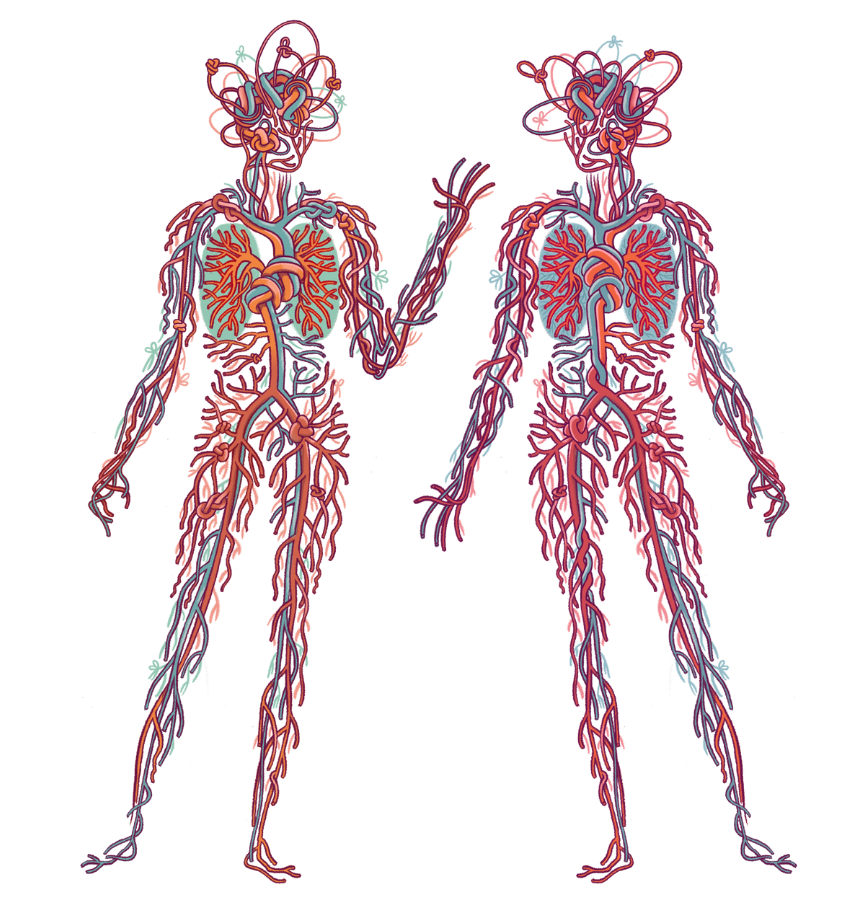
Your autonomic nervous system
Your internal arousal level is managed by your autonomic nervous system, and specifically by its two branches:
- Sympathetic: your accelerator. It mobilises you for action, sharpens focus, and drives energy.
- Parasympathetic: your brake. It promotes rest, digestion, and recovery.
Neither is better; you need both, moving fluidly between them as the moment demands. Problems start when there isn't enough recovery to offset the activation. Under sustained pressure, two things tend to happen:
- Your baseline shifts upward: activation becomes your default, even at rest. We move into a state of chronic hyperarousal.
- Your system loses flexibility: it gets very good at ramping up, but much less practiced at coming back down.
The good news: this baseline can shift back, and that flexibility can be rebuilt. That's why we look at regulation across three levels.
The framework
Nervous system regulation: 3 levels
Regulation happens across 3 levels: building a strong, balanced baseline that raises your stress threshold, and having tools to quickly shift your autonomic arousal in the moment.
Why the breath, specifically
There are many ways to regulate your autonomic arousal level, but none are as simple, as free, and as available as the breath. It's the one function of your nervous system that runs automatically and that you can consciously override, any time, anywhere, making it the most direct lever you have. Two mechanisms explain why.
The vagus nerve is the largest cranial nerve in the body, running through nearly every major organ, including the heart and lungs; it's the main channel of your parasympathetic system. With every inhale, vagal activity eases and your heart rate rises slightly; with every exhale, vagal activity increases and your heart rate slows. That's why a longer exhale is calming, specifically: it's a direct, mechanical signal to your nervous system, not a metaphor.
Respiratory sinus arrhythmia (RSA) is the natural speeding-up of your heart rate on the inhale and slowing on the exhale. Breathing slowly and deliberately amplifies that rhythm, and higher RSA is linked to better attention, stronger working memory, and more coherent activity in the prefrontal cortex, the part of your brain responsible for judgment under pressure. RSA is also directly linked to your HRV: the more responsive that rhythm, the more adaptive and resilient your system.
About the facilitator
Charlotte Grysolle
Breath & Nervous System Coach. Former Client Director at global advertising agencies and edtech startups (13 years across New York, Singapore and London) before training in breathwork and nervous system regulation. That corporate background is why the techniques are built for real workdays, not a retreat.
Corporate experience
- 13 years in client-facing roles across New York, Singapore and London
- Managed client relationships and new business development at global agencies and edtech startups
- Understands modern workplace demands firsthand, in-person and remote
Performance expertise
- Certified Oxygen Advantage® Instructor
- Certified Breath Science Practitioner, with sleep & respiratory scientist Martin McPhilimey
- ICF-Accredited Body-Oriented Coach
Evidence-based approach
- Writes research-backed content on neuroscience, breath science and performance optimisation
- 2,700+ readers on a weekly newsletter
- Workshops & offsites for teams at Google, L’Oréal, Sofina, Data Tech Fund, Level20 and the Octave Programme