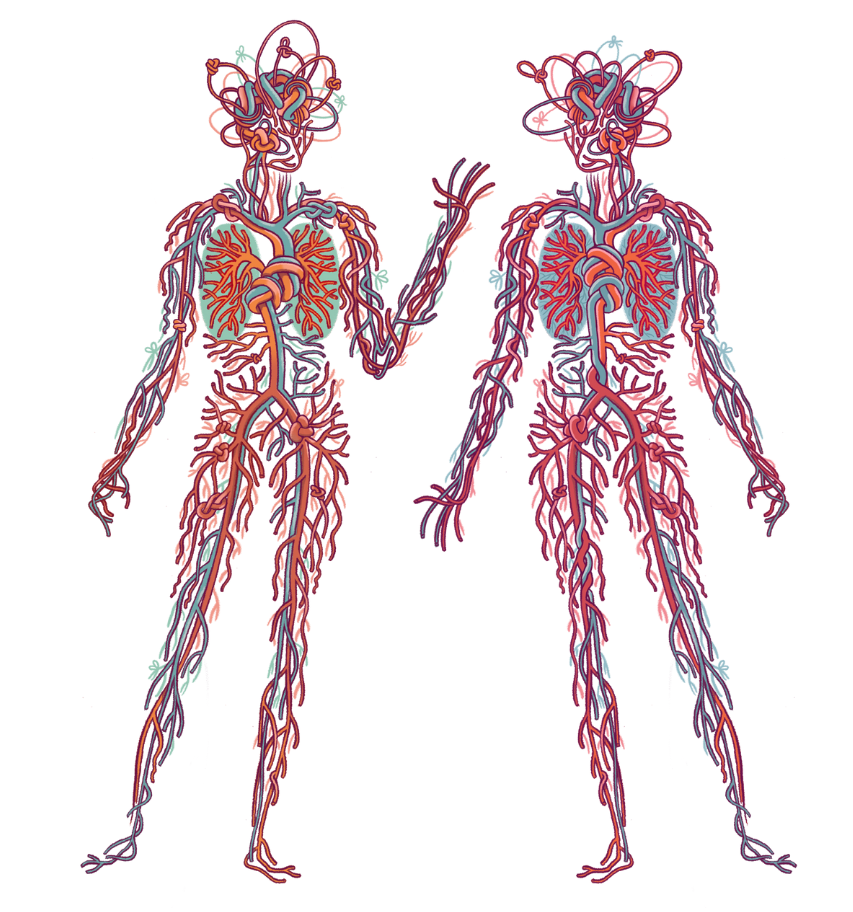
If there’s one idea that completely changed how I understand my own motivation, energy, and emotions—it’s this: Your daily experience = chemical cocktail Feeling off? Irritated? Unmotivated? It’s easy to internalize that as a personal failure, like something’s wrong with you. But often, it’s not you as in you at a fundamental level. It’s your neurochemistry. We don’t talk about this enough. We expect ourselves to be focused, creative, calm, and motivated on demand—without ever learning how those states are actually created in the body. The truth is: If you want more consistent focus and energy, you need to understand the system that produces it. And once you start to understand that? You stop taking every dip in motivation so personally. You start recognizing the patterns. You start learning how to shift your state—not with willpower, but with awareness and small, consistent tools. A Deep-Dive Series into your Neurochemistry In this series, I’m breaking down the 5 key chemicals that shape how you feel, focus, and function—day to day. Dopamine → motivation & pursuit Epinephrine → energy & alertness Acetylcholine → focus & precision Serotonin → connection & contentment Cortisol → rhythms & resilience Scientists have identified over a hundred different neurotransmitters in the human nervous system. But when it comes to peak performance and recovery… these five are key. What you’ll get in this...

There's a molecule in your brain and body that, when released, tends to make you look for things outside of yourself—pursue something you don't yet have. That's dopamine. It's the molecule of motivation, pursuit and desire. In early environments, food, shelter, mates, and safety were not guaranteed. Humans had to move toward them—often across long distances and in dangerous circumstances. And so dopamine evolved to signal: "That thing over there could help you survive. Go get it." It's the chemical of forward action. When dopamine rises, it energizes your system: Increases willingness to put in effort Boosts focus on potential rewards Strengthens memory around success and learning Suppresses distractions and redirects attention toward the goal And so this is key to understand: Dopamine doesn't reward having the thing. It rewards pursuing the thing. That's why: You can feel most alive when you're working toward something, not just when you achieve it Motivation dips when there's no challenge, novelty, or uncertainty Cheap dopamine hits (scrolling, sugar, binge-watching) trick your brain into feeling "accomplished" without real effort—and leave you feeling empty. In short, dopamine is what helped our ancestors leave the cave, track an animal for miles, and persist in building fire—even when it was hard. And in the modern world? It's the same...

I used to think I was bad at focus. Some mornings, I’d feel unstoppable—sharp, clear, energized. Ideas would land. I’d knock out work in record time. Other days: total fog. I’d sit there, scrolling, staring, refreshing my inbox—waiting for my brain to click. For the longest time, I blamed myself. Not disciplined enough. Not organized enough. Not enough. But it turns out, nothing wrong with me. I was just operating on a system I didn’t understand. A system where neurochemicals drive my energy and focus. Last week, we explored dopamine—the molecule of motivation, desire, and pursuit. It’s what makes you want something, what gets you excited about a goal. Epinephrine is the molecule of energy, alertness, and action. It’s what turns that motivation into focus and action. You can think of dopamine as the spark and epinephrine as the fuel. Of course, I’m breaking these down into separate emails for clarity, but in your brain and body, these systems are deeply interconnected. The same tools that boost dopamine often also boost epinephrine. And that’s good news—because it means a few simple practices can shift your entire neurophysiology! Let’s get into it. Epinephrine: what do we need to know? Epinephrine (also known as adrenaline) is the body’s rapid-deployment ‘go’ signal. Your adrenal glands can release it as a hormone...

The human brain is built to wander. Left to its own devices—in traffic, on a trail, in the shower—attention quickly drifts. (Try counting ten slow breaths without losing track; it’s surprisingly hard!) Deep, single-task focus forces that nomadic mind to plant its flag, which is why it’s such hard work (and why most of us are pretty crap at it!) But the fact that it’s hard doesn’t mean there’s something wrong with our brain. It’s doing exactly what its designed to do. So for me, Huberman’s post is a blunt but important reminder: Stop searching for a pill or waiting for the perfect conditions. Instead, train the skill. Yes, it’s hard, but it’s worth it. However! Before we attempt a 3-hour deep-work marathon, we need the neural equivalent of marathon prep: steady mileage, smart fuel, the right gear. That means understanding and optimising the key neurochemicals involved in focus. We’ve already covered dopamine and epinephrine. Today we’re zooming in on the third player: acetylcholine. Acetylcholine: what do we need to know? Neuroscientists describe focus as a combination of three neurochemicals working together. I like this analogy to bring this to life visually: Dopamine is the propeller that drives the arrow forward, providing the motivation and drive to start and sustain your effort. Epinephrine is the arrow’s shaft, providing...

I used to think a good mood just happened—and if it didn’t, I was stuck. I’d wake up, scan my internal state, and let that decide my day. Good mood? Lace up for a run, make a nice breakfast, text a friend. Low mood? Skip the workout, dive straight into email, postpone plans “until I feel like it.” It took a lot of trial and error to realize I had the sequence backwards. Moving my body, proper food, a catch-up with a friend—those are the levers that create the good mood. Now, I try make this my default cycle: Eat well → feel better → have energy to work Move my body → mood rises → relationships feel easier See friends → serotonin spikes → motivation returns Doesn’t mean it’s easy though. I fall back into the old cycle regularly. “I don’t have time to go for lunch today.” Or “I wasted too much time today so now I need to cancel dinner so I can catch up tonight.” Yet every single time I go for lunch and see a friend, even if it feels uncomfortable to step away from work, I come back feeling reset and refreshed. The molecule at the center of that loop is serotonin—our brain’s built-in signal for calm, contentment,...